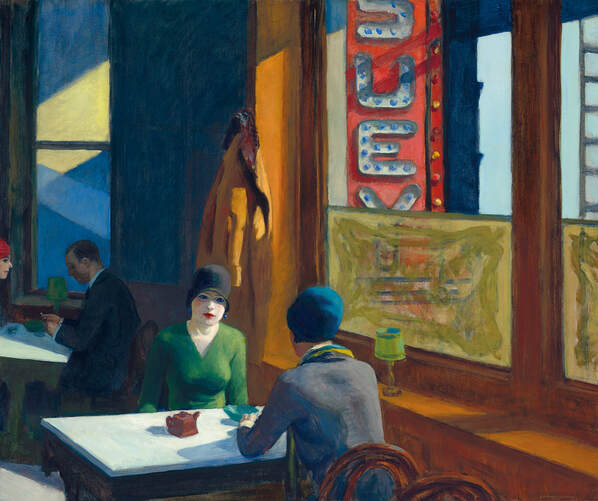
 Chop Suey, by Edward Hopper (USA) 1929 Amber Amber stretches upwards to find the daylight. She avoids being pulled over by the underworld. Pixels of grey and brown fight each other on the muddy forest floor. Like wild dogs, they claw and thrash, attempting to rise. Amber pulls her yellow body away, her goal is to find the sun, top-up and rejuvenate. She wants saving from ageless darkness. Ghoul’s slither and grasp, make attempts to attach to old tree-stumps and cords of withered vine. A lady dressed in a white cloak rode in on a blood-red horse. Amber waits, she wants them to pass. Suddenly the ground begins to roll beneath her. Slipping and clawing to hold on, Amber begins to slide out, away. The white-cloaked woman gets off her horse, drops the reins, and begins to step towards Amber. The blood-red horse looks away. As if in a dream, Amber sees what has not yet happened. She is now being revived by a giant woodcutter. He holds her tenderly in his arms. She is crying. Her arm hurts. It is bleeding and he pushes his finger on the gash. He soothes her with rolling words, they echo like more sounds. She calls out aloud, deep shouts to her Angels to come to her, to aid her. Nearby stands a neo-gothic stone church. Smoke filters out the door. She is exhausted and scorched. She remembers Icarus. He could have felt this way after flying too close to the sun, she wonders aloud if Icarus had felt that way. Did he call to his Angels to come to him? Did the Angels revive him? The woodcutter gave Amber a drink from his bottle. She rested into his chest and fell into a deep sleep. When she wakes up, she is living in an Ed Hopper painting. She is in a café. Long shadows are casting shapes across the floor. She watches two girls sitting at a table, chatting. She wishes she could go to them and chat too. She would love to join them. One has her coat hung up on a peg above her on the wall. The other girl is wearing a university scarf. She is smoking a cigarette; she blows the smoke in circles. Both are deep in conversation with each other. A couple, perhaps? They are enough in themselves, it appears. Amber watches another couple nearby. Middle-aged and with less to say. They move their cups around, carefully. Twisting a cup by the handle, round and around. The woman is attempting to read the tea leaves. Amber decides to leave. She pulls the door shut as she exits the Chop Suey café. She then decides to go somewhere to sleep. To-morrow perhaps , she will seek out Rawdi, climb into his “Creation” painting. A space to hold her and support her. There might be more than sun-bathing and calm action living in the desert city. Geometric conversations with Amber’s cousins, if she could find them. Rambling through the city and seeking a new keyhole. One to fit the key she now holds. This reminds her to check the cord around her neck. Placing her hand upon the key gives her reassurance. She taps it three times and pushes it inside her sweater. It is time to sleep. She gives in and lies out straight. Margaret Kiernan This story was also inspired by The Creation, by Abdulhalim Radwi (Saudi Arabia) contemporary Margaret Kiernan has a background in professional advocacy. She writes and publishes poetry and short stories. Credits include The Blue Nib, The Galway Review, Lothlorien Poetry Journal, Country Life, and more. She is listed in The Index of Contemporary Women Poets in Ireland, 2020. Margaret has four grown up children. She lives with her dog, Molly. She paints landscapes and still-life.
0 Comments
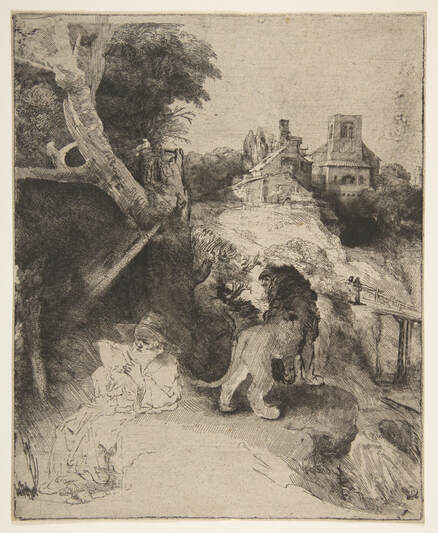 Saint Jerome Reading in an Italian Landscape, Rembrandt (Netherlands) 1653 Saint Jerome in a Landscape The lion, seen from behind, wears a mane of midnight. If he could talk he would talk of lying down with lambs, of the hole of the asp and of a sore paw. The sting, sempiternal. The same wood as the crown of thorns. His friend, the saint, would be his listener. Jerome, a little man at one with the rock of an ancient castlehill. The illegible scrub of his hands: pages, or a tablet, are filled with holy scripture. His stylo: a three inches thorn, smoothed. Behold, isn’t he wearing the travel hat and an aura of clouds that you can also see in Tischbein’s Goethe in the Roman Campagna? And above the visitor of the Onehunga cemetery on a hazy Sunday afternoon? Watching the incoming tide, a charcoal horizon obscuring far away lands he remembers; his brother who had sold the fields for a sack of millet then went into the bush to listen to the wild bees’ hymns in the cathedral of a dead lion’s rib cage. Norman P. Franke N.B. Legend has it that Saint Jerome who translated the Bible from Greek into Latin (the Vulgate Latin Bible) had a pet lion. Saint Jerome had befriended the lion by pulling out a thorn from the lion’s paw. Dr Norman P. Franke is a New Zealand based poet, scholar and documentary filmmaker. He has published widely about 18th century literature as well as German-speaking exile literature (Albert Einstein, Else Lasker-Schüler, Karl Wolfskehl) and eco-poetics. Norman’s poetry has been broadcasted on radio and published in anthologies in Austria, Germany, New Zealand, Switzerland, the UK and the USA. [2017/18 finalist at the Aesthetica (UK) and Feldkircher (Austria) literature contests; 2019 takahē (NZ), and 2019 and 2020 Flash Frontier (longlist), NZ Flash Frontier, regional winner Waikato 2021, Münchner Lyrikpreis, Germany (shortlist) 2021, Bridgeport Competition, UK (shortlist) 2021] This fascinating area of art history if one of Lorette's passions...
Join us on online on Thursday, July 7 from 3 to 5 PM Eastern Standard Time to learn about "Outsider Art," a problematic umbrella term for self-taught art, Art Brut, prison art, art of artists with mental illness, art of artists who are not literate, remote artists' art, some folk art, "raw art," and more. The world of outsider art- art outside the mainstream of the art world narrative- is a fascinating tapestry of human histories. Writers will find endless inspiration in the biographies of trial and triumph and in rich and curious paintings, sculptures, and art environments of artists like Bill Traylor, Sister Gertrude, Henry Darger and many more. We will take a visual tour through outsider art's history, highlighting some fascinating pictures and stories. There will be some creative brainstorming exercises to spark imagination and ideas, and a chance to start or write a poem or story. Doors open at 2.45 PM EST, for those who wish to meet and mingle. 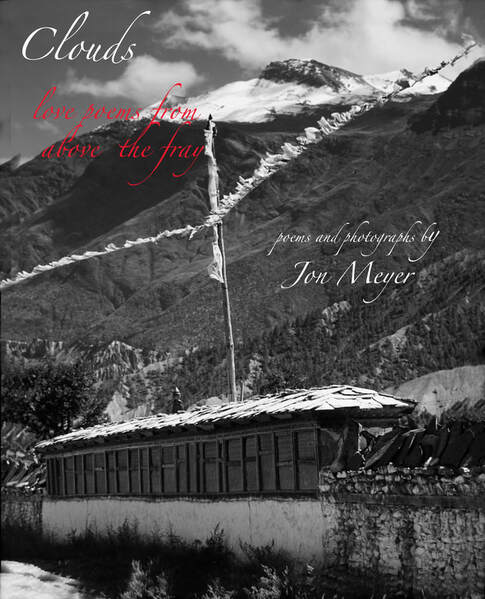 Click book cover for author site. 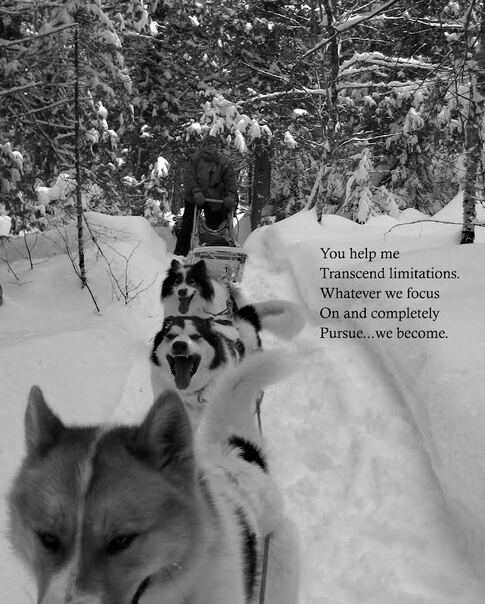 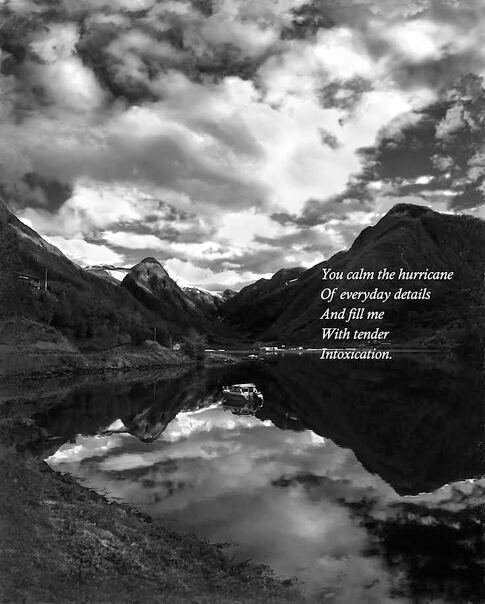 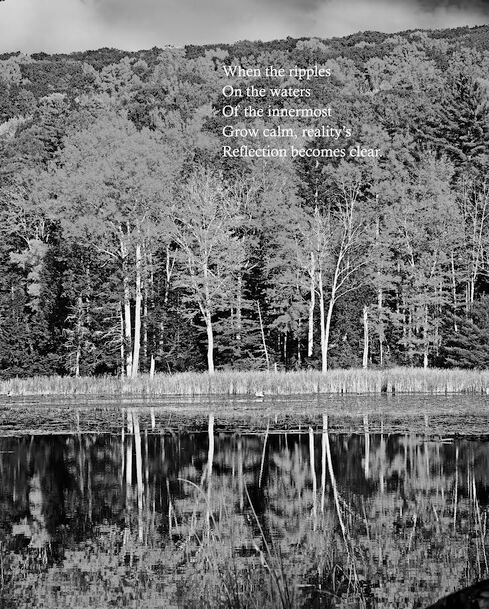 Jon Meyer Jon Meyer has written for The Village voice, ARTnews, ARTS, New Art Examiner, Visions Quarterly, CRITS, Q, Dialog, Art New England, Fictional Café, and many more publications. As Department Chair, Meyer led a small team producing a film about one of his students, Dan Keplinger. This film, King Gimp, won the Oscar for best short documentary at the 2000 Academy Awards. Meyer’s work has been in 60 solo and group exhibitions (18 museum exhibitions) and 20 museum/public collections globally. He has received 12 grants, including a National Endowment for the Arts grant. More information can be found at www.jonmeyerpoetry.com. 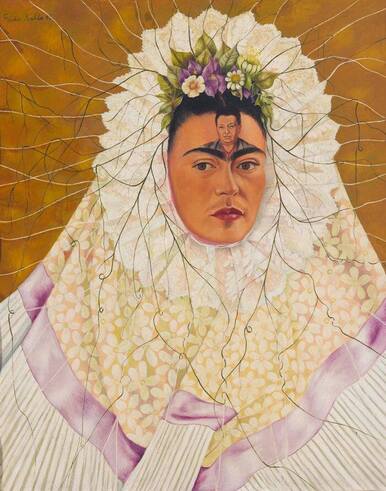 Self Portrait as a Tehuana, by Frida Kahlo (Mexico) 1943 After Self Portrait as a Tehuana, by Frida Kahlo (Mexico) 1943 Your image burns through my skin – it is incised on my skull - it sears my brain. The iron rod that pierced my womb is as nothing compared to the sword you twisted in my heart, holding it up, blood still dripping, to the gods. I am an icon, a sacrifice shrouded in lace. Lovers in past lives, we are compelled to work out our destiny, a battle to this death and the next. I have you now as I never did in life. Soon we will dance on the Day of the Dead, and you will lay on my altar morphine, tequila, and marigolds. Frida Kahlo wrote: There have been two great accidents in my life. One was the trolley and the other was Diego. Diego was by far the worst. She died aged 47, perhaps of an intended or unintended morphine overdose. The last words in her diary were: I hope exit is joyful and I hope never to come back. Sue Mackrell Sue Mackrell lives in Leicester, UK, where she was fortunate enough to witness first-hand the discovery and reinterment of Richard III. Her poems, short stories and non-fiction historical pieces have been published online and in print including in Bloody Amazing, which won the Saboteur Award for Best Anthology 2021. As lockdown restrictions ease she is looking forward to visiting galleries and museums again; a disappointment last year was missing the Paula Rego retrospective at Tate Britain. 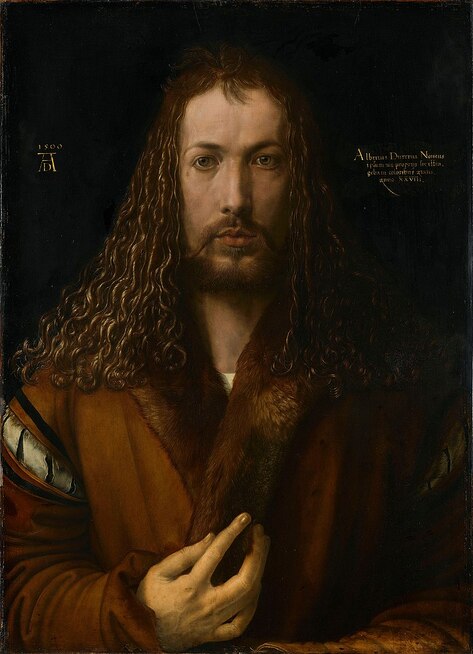 Self Portrait, by Albrecht Dürer, (Germany) 1500 In Search of Albrecht Dürer (1471-1528) Let me reach through the scrim of five centuries with the language and hindsight of today - to see what I can hold. Morning Outside the window water saturates the sky, the branches are smudged, soft rivulets course through a distorted heaven. This dreamy otherness with its mellow linearity asks for the brush, just a touch of colour and an abundance of water. The willow branches hang low over the stilled water, each one tipped by a quivering globule of liquid. Willing and pensive they sway over their own reflection. This suspension of light, this diffusion of water in air feels like a breath held – when I do breathe out and open the window, the moist, invigorating morning air brushes my face. Below me, in the workroom, I hear footfall, the clearing of phlegm from a night-time throat, and the soft shuffle of my apprentice going about his duties. I will be down shortly. ** What is Beauty? What is beauty I am asked time and again, my answer, “I do not know,” never satisfies. Pressed, I suggest – usefulness, pleasure, and harmony but never seem to give satisfaction. Beauty, my eye tells me, is there in the unformed figure of the young girl, her already too tight bodice encasing her like a bud, in her unfocussed gaze, her lack of knowing, much like in her counterpart, the old woman, the withered crone of my drawings, with her ropey neck, emptied out clavicles, caved-in cheeks and mouth drawn tight that speak of the life endured. I remember reaching for the charcoal stick to release my compassion into the fluting, draping lines, the faint criss-cross strokes across her chest, her heart. But her gaze, that vast pool of disillusionment, has let go of life’s concerns and found a new focus – blankly resigned to whatever time is left. How quickly her familiar face had taken shape under my hand, as I, with a son’s loving surety, smudged the charcoal’s soft burr to soften the lines that life engraved, and that I, it seems, was destined to retrace. 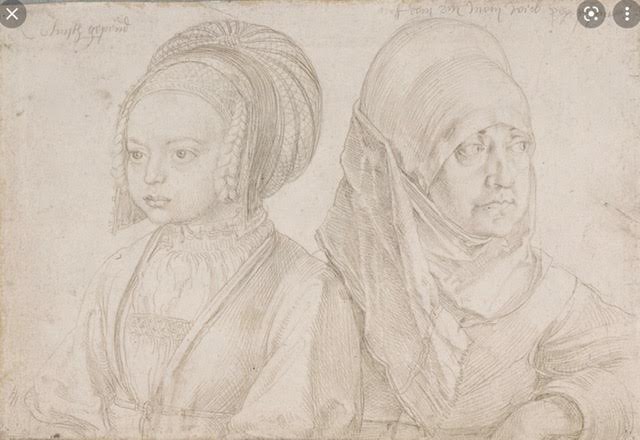 Young Girl of Cologne and Agnes Dürer, by Albrecht Dürer (Germany) 1520 Double Portraits As I smooth out the latest likeness of Agnes, my wife, on the worktable, I wonder what made me explore the “double-portrait” the way I have. There are several of them by now, all done over the past year – in the latest, a young girl from Cologne, dreams herself outward just beyond the imagined frame, while my Agnes, her back turned on the girl, fastens her eyes unswervingly somewhere beyond the margin. She will not approve of her likeness, I think – not, that she would tell me as much – she never lost that tightly wound look that I caught in my first drawings of her. And she would be right. There is pain here, the pain of the childless woman trapped in my portrait next to the great absence in her life. Am I cruel to touch that wound with my fine silverpoint pencil, which line-by-line makes this absence become flesh beside her? In other portraits: “Young woman-Old woman”, or “Tobler and Pfinzig,” the pairings were dictated by reason, urged on paper by my entranced hand which loves texture of dress and ornament, yet also tries to delve beneath the surface of skin and bone to snag character in a pair of pursed lips, or the burn and gleam of a pair of eyes. Only one double portrait stands apart: “Caspar Sturm – River Landscape”. Caspar, a huge solid man just took possession of the page. His rough-hewn jaw, dimpled chin, sensitive mouth a perfect study in contrasts – even his eyes with their characteristic cast of one eye looking fiercely ahead, while the other, obliquely turned right, speak of the man. I well remember his soft cap, its complex many-folded shape, earflaps slightly askew as if he had just walked in off the street. No, Caspar’s portrait would not suffer another’s by its side. Instead, I filled in a delicate river landscape, its shore lined with heavy fortifications like the ramparts of an old town. More of a dreamscape, than one seen by the daytime eye. I was never sure whether Caspar approved of this likeness, whether he even recognized himself. Perhaps he just thought I had done well by showing the intricate folds of his homely cap and the narrow ribbon that tied his shirt shut at the neck. By way of an afterthought – two years later, this very same Caspar, aided our man Luther’s escape to the Diet of Worms. ** Noon – or Thereabouts There is always a part of me that harkens to the noises of the household, the part, furthest removed from my point of concentration. At times, my hand does one thing, while I, in another realm, pursue something yet unthought. I may hunt down this elusive prey for days, even weeks. It even invades my sleep – often to good effect. This silent pursuit along a fine-honed edge of attention can lead me to a place, where what my eyes have held, and what my hands have learned, coalesce to bring forth something new. This liminal space I consider my real workshop. Untouched by weather, the tempers of the household, considerations of economy, practicality, and above all, the desire of others, it is my one free space. 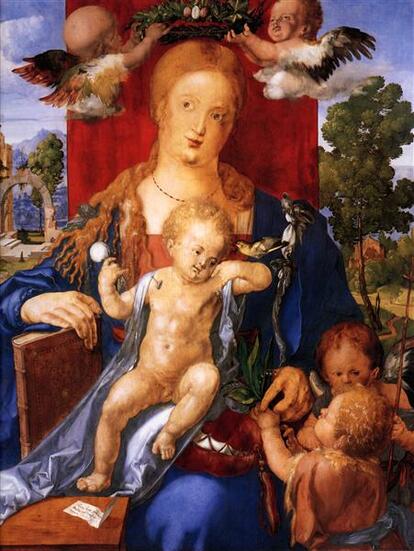 Madonna with the Siskin, by Albrecht Durer (Germany) 1506 Carduelis Spinus - Siskin My apprentices often scatter the leavings of their meals along the windowsill. Just now, a slight, scrabbling sound from the open window makes me lift my head from the quarto sheet, and I see, as expected, the compact olive green body, the cadmium-yellow streaked wings, the sooty bib and the tell-tale, inked cap of a siskin. They are numerous around here, filling the air with their ascending and descending trills, their effortless, rapid twitter. Their flitting about, their sudden disappearances remind me of the old tale of the Siskin’s magic stone: the one they guard closely in their nests to assure invisibility. Some time ago I painted one such bird – made him permanently visible. In Madonna with the Siskin, a humble siskin alights on the infant’s left arm, wings aflutter, it animates the whole scene. 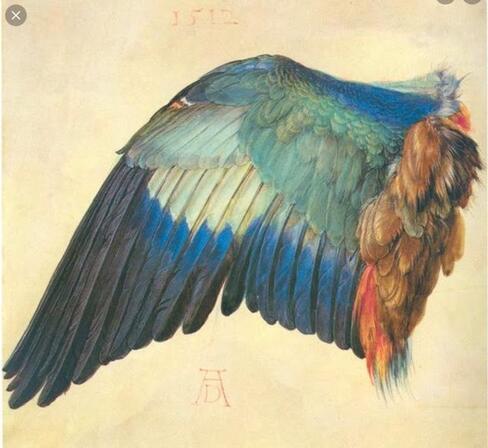 Wing of Blue Roller, by Albrecht Dürer (Germany) 1512 Wings: Blue Roller and Angels I cannot recall the exact moment when fate dropped the wing of the Blue Roller on my worktable. Not the whole bird, just its neatly severed wing. There it lay, spread out like a fan from the orient, in breathtaking colours of indigo, iron ore, verdigris and wet clay. It recalled the charming tale, apocryphal or not, of the male, who as part of his courtship dance, presents, holding a feather in his beak. This wing unfurled, its complex layers, gradients of colour culminating in veritable cumulus clouds of grey-tinged green, is held by the deep indigo band of the shoulder. How well I remember the pleasure of losing myself in the minute strokes of the downy afterfeathers, which, light as air, put one in mind of the very idea of flight. How often have I crowded my scenes of veneration with countless putti and angels? The whirr of their wings have filled whole images. I wonder, are these the wings of my belief, or of my doubt? 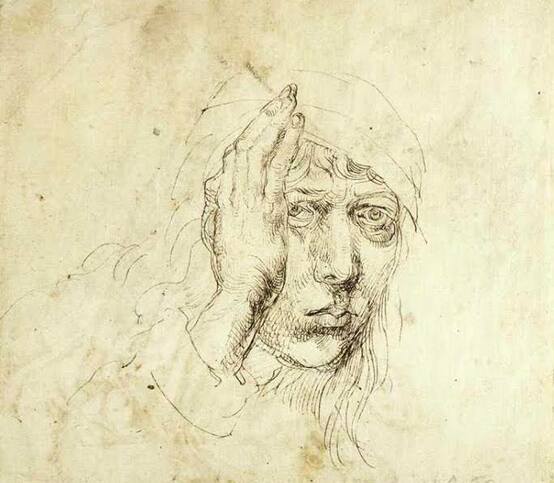 Self Portrait, by Albrecht Dürer (Germany) c. 1491 “Behold the Man” This is the beginning: age thirteen. My very first self-portrait, its tender half-profile catches the still slumbering awareness of my younger years, each subsequent portrait, in tandem with my standing in the world, moves in increments from delicate silverpoint to the “undying” colour of oil. What was I searching for beyond the act of showing? Beyond the sumptuous silk, the lavish fur trim, the brocade and tassels, my indulgent depictions of hair and my fair countenance, beyond documenting my increased value to the world? Yet, I remember other portraits amongst the many – where, by unmasking skin, bone and sinew my body speaks truer. One, in particular, where my probing look reaches out from the canvas and shows a troubling awareness in the hand raised to shield my face. Was I trying to lift the veil that slides between us and our true knowing of who we are? That sphere just below, and beyond our ken, where we, and what we might be, lies dreaming? Yes, I was searching. Am doing so still. Am still, above all, my own “Man of Sorrows.” 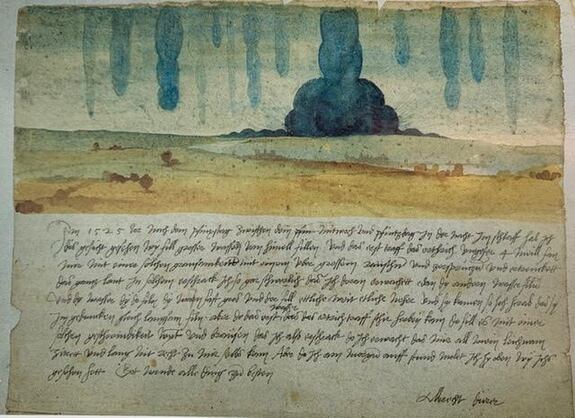 Dream Vision, by Albrecht Dürer (Germany) 1525 The Dream This dream, this vision of the night, ineffable and powerful, took hold of me between Wednesday and Whitsuntide: … great waters fell from the sky four miles on, they hit the earth with such cruel, momentous splashing, such a fury of sound, that all of the land appeared drowned. Some of it fell further away, some closer, giving the appearances of slow motion – but wherever the water hit, it did so accompanied by strong winds and a sound so wrenching, it tore me out of the dream and left me trembling – and for a long time, I could not find back to myself… May God turn everything for the best.* When I surface sucking the air like a man returned from near drowning, I reach for my pen and watercolours. A delicate wash of cobalt seeps in loose runnels from a wan sky, the center column, in a deeper hue, piles volume on volume. Masses of water spreading above patches of delicate ochre that dot a bereft landscape. Why this dread? Why this feeling of apocalyptic doom? What unnameable thing fills me with such terror? Could it be the undoing of form as colour drips like hot wax from an amorphous sky? Or is it the very loss of line, of verisimilitude that throws my art into question? *translation my own ** Night Thoughts How rare these moments of true silence during a sleepless night a silence in which the world itself seems to have fallen by-the-way and yet, I discern a cooling breeze playing in the far-off trees, then, a short scuffle in the courtyard below as if the dogs were torn out of their dreams much later, further off, but coming closer, a rumbling of wheels on cobblestones, their grating metallic ring reverberating on stone I must have fallen asleep just now – found myself back in Antwerp – on the ship. Once more, we were about to be swept out to sea, helpless puppets at the mercy of the fickle elements my life, my life’s work, the grandeur, the hardship, the pain, the joy and the glory no more than the ephemeral gestures of wave after wave dissolving. Finally, the sound of early morning bells, their intermingling harmonies, and the discordance of one belfry competing against the others like a rival belief call me back to the work still undone, and the remaining years waiting to be rounded off. Barbara Ponomareff Barbara Ponomareff lives in southern Ontario, Canada. By profession a child psychotherapist, she has been fortunate to be able to pursue her lifelong interest in literature, art and psychology since her retirement. The first of her two novellas, dealt with a possible life of the painter J.S. Chardin. Her short stories, memoirs and poetry have appeared in Descant, (EX)cite, Precipice and various other literary magazines and anthologies. She has contributed to The Ekphrastic Review on numerous occasions and was delighted to win one of the recent flash story contests. 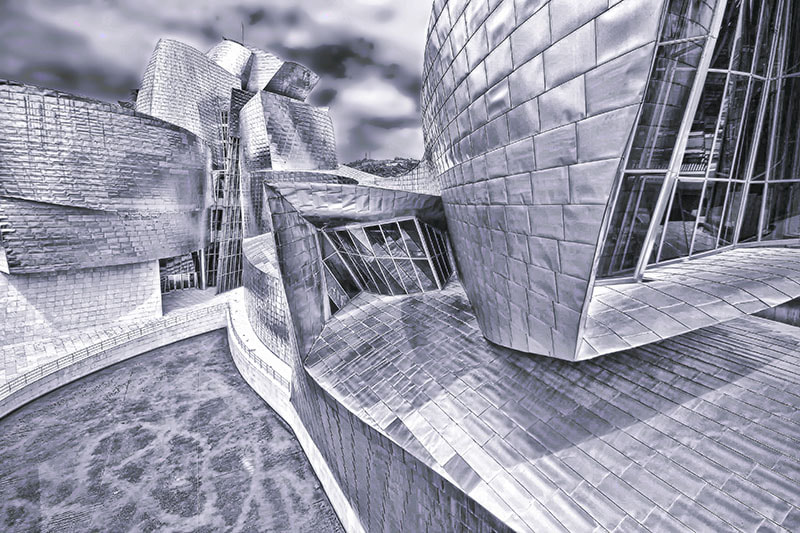 Guggenheim Bilbao Spain (Architect, Frank Gehry), photography by Jack Torcello 2007 (CC BY-SA 2.0) Credo Fractal: a cascade of never-ending, self-similar, repeated elements that change in scale but retain similar shape. A cascade of infinite is why I believe in loops and spirals, subtle shifts, cycles. My son, preschooler stunned by the science museum, sticks his hand into a glacier, the chunk a broken testimony, the history of a world dissolving. Cold! It’s cold! And it’s melting. Look right here, he says. Similarities of self astonish. I see them in architecture, geometry a welcome language, shapes a new alphabet for prayer and song. I study Peter Eisenman’s House 11a lapping up patterns, interlocking Ls, squares and replicated rectangles-- the syntax of ideas. For Frank Gehry’s Guggenheim in Bilbao, syntax looks like titanium scales rhyming across curves. Glass and limestone patterns, similarities of visual texture, are creations of weight, depth; order breaks tension where the lines turn. A cascade of repeating elements grounds my belief in humanity as mystery. Signs appear: a sound, song, and syllable mean things. Armadillo! Armadillo! sings my son, the youngest, using his Louis Armstrong voice; grit gives way to twang and twang turns into hard-rock screams. He’s an oracle at four years old, an armor-clad mammal his muse. My oldest son speaks in code, echolalia a symptom of a seizure- besieged brain. When he utters, No and No and No and No, then I don’t know I don’t know I don’t know, I listen for a divine voice revealed. Cascades changing in scale, not shape, is why I trust weight, depth, height—materials and thingness: Saturn’s rings, the Pacific coastline, bolts of lightning, a Romanesco cauliflower, angelica flower- heads, veins of sycamore leaves, seashells, snowflakes, blood vessels, DNA. A range and scope of fractals inspire awe, a cascade of never-ending wonder at both connections and aberrations as well as places of perfect order and broken patterns. When I consider what we may be reduced-sized copies of, I grapple with insight; it hovers in physics and biology, the shapes of letters, the magic of new languages, the mystery of cells and synapses, the music of my sons’ voices, the geometries of buildings and trees. Sometimes I glimpse an answer, something like seeing starlight years after the star dies, supernovas. Four hours before my youngest son’s birth, I dreamed my sister, dead 31 years, placed him in my arms: Take care of him, she said. He has her eyes, ice-blue and illumined by God. Christine Stewart-Nuñez This poem first appeared in the author's book, The Poet & The Architect, Terrapin Press, 2021. Christine Stewart-Nuñez is South Dakota’s poet laureate, is the author and editor of several books of poetry, including The Poet & The Architect (Terrapin Books 2021), South Dakota in Poems: An Anthology (2020), Untrussed (University of New Mexico Press 2016) and Bluewords Greening (Terrapin Books 2016), winner of the 2018 Whirling Prize. Christine’s teaching, creative work, and service has earned accolades from South Dakota State University, including the Dr. April Brooks Woman of Distinction Award (2020) and the Outstanding Experiential Learning Educator Award (2019). She’s the founder of the Women Poets Collective, a regional group focused on advancing their writing through peer critique and support. 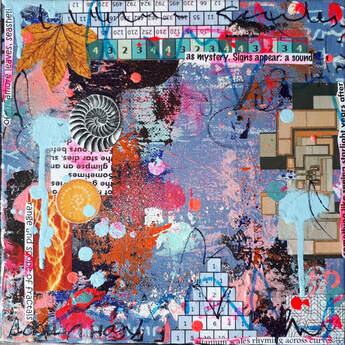 Credo, Triptych, by Lorette C. Luzajic (Canada) 2022 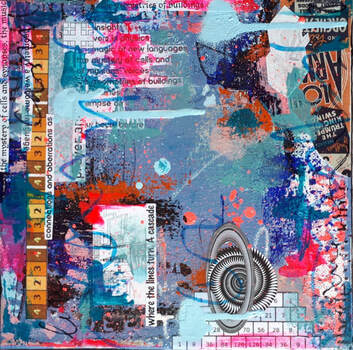 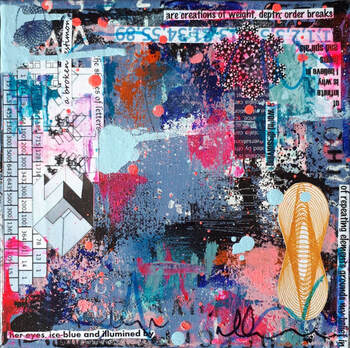 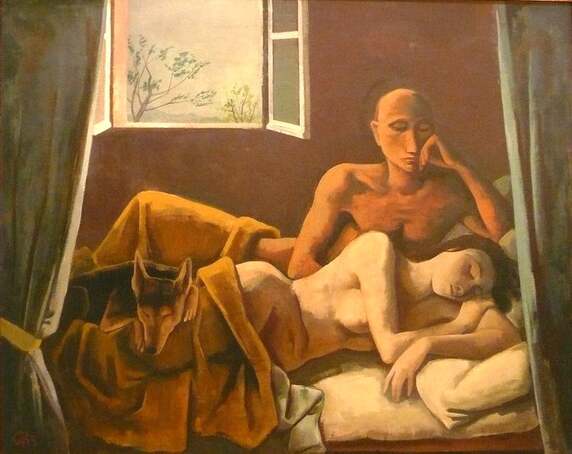 Frühe Stunde (Early Hour), by Karl Hofer (Germany) 1935 The Early Hour He looked at her laying so peacefully. Content. Comfortable. The sunlight beaming through the window perfectly shining on her face highlighting her cheekbones and the color in her hair. His dog, Bailey, snoring, sound asleep on the woman's legs. A picture perfect moment. How could anything be more than what this moment was, he thought. Or rather, what it was supposed to be. For years they coveted having this moment. For years, they wished and hoped and dreamed just to have this. The sneaking around, the secret “I love you’s”, all to be together for this. He had hoped that it would feel different. That waking up next to her would feel like it was all worth it and that he would finally know who he was supposed to be with and that she was for sure the one. Instead, he felt nothing. The night they had was incredible and they had acted like it was the most normal thing to be together. The instant comfort and flow of conversation was promising. And then the night ended. His face scrunched up as he thought. Why is this so hard? Is there something wrong with me? He watched her a little more, waiting for a feeling of admiration to come over him like it should have, but where there was supposed to be love and lust and happiness, there was impatience and indifference. There was nothing wrong with her at all, he thought. She did nothing wrong. She is exactly who he knew her to be. The person that he fell in love with over text and facetime and snapchat. She was wild, honest, blunt, caring, smart, creative, all the things that his wife wasn’t, and it intrigued him. Yet, as she laid there, in the place he had longed to have her in for years, it wasn’t enough. Becca Moss Becca Moss: "I’m Becca, I am a Creative Writing Major at PSU focusing on short story fiction. I actually wrote this ekphrasis for a non-fiction class about one of the art pieces in the Portland Art Museum. I didn’t know I wanted to be a writer until years after I had graduated high school and finally started going to college to get my BFA. I look forward to graduating and hopefully having more pieces published!" 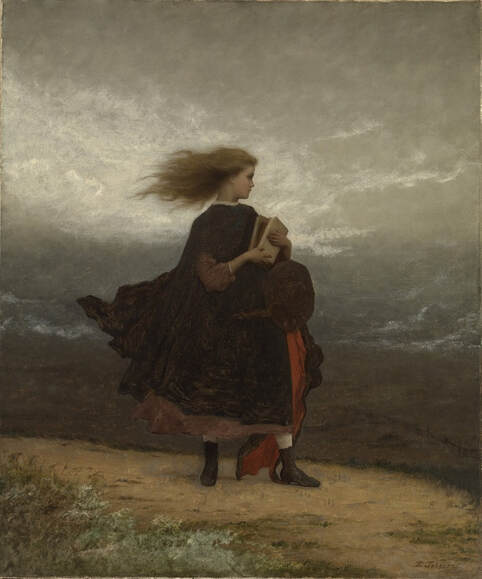 The Girl I Left Behind Me, by Eastman Johnson (USA) 1872 The Girl I Left Behind Me I think I will never be satisfied. I have to think up names for the three different kinds of wind that lift her hair and coat and part the sky behind her face but don’t blow her wide-brimmed hat away. She’s been reading recently, studying the classics, and I will never be satisfied and she knows it, I think. She knows all about it, knows what I mean when I say I’ve left a girl behind, knows all three winds’ three names. But never mind. It’s cold outside and she invites me in somewhere for a cup of good tea, an earl grey that tastes to me like it knows where the bodies are buried. (They’re buried under the feet of girls about whom all I can say is that their names and faces break the colour right out of the sky.) Meghan Kemp-Gee This poem was first published at Aurora Journal. Meghan Kemp-Gee lives somewhere between Vancouver BC and Fredericton NB. She writes poetry, comics, and scripts of all kinds. She co-created the webcomics Contested Strip and Space Heroines of El-Andoo, and her comics and short fiction have been published in numerous anthologies. Her poetry has recently appeared in PRISM, Copper Nickel, Rising Phoenix Review, The Shore, Stone of Madness, Altadena Poetry Review, Anomaly, Train, and Rejection Letters. She studied at Amherst College and Chapman University and is currently a PhD student at the University of New Brunswick. She also teaches composition and plays ultimate frisbee. You can find her on Twitter @MadMollGreen. 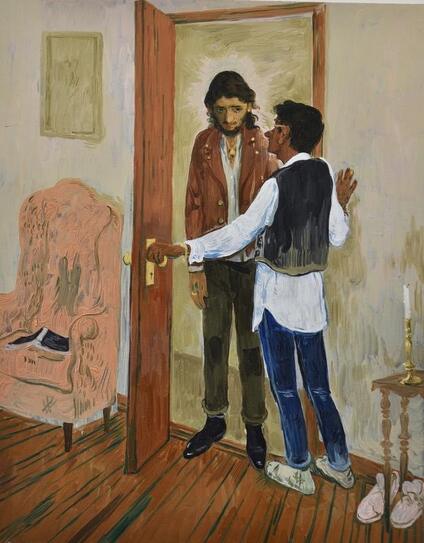 Salman Toor- Arrival II, 2019 Oil on panel 20 x 16 inches (50.8 x 40.6 cm) © Salman Toor; Courtesy of the artist and Luhring Augustine, New York. Horacio at My Door Again The Universe died. So says Horacio. He’s at my door, again. I keep one hand on the wall, and one on the door knob, blocking his entrance, casually. I got evicted from my last apartment because of Horacio. And before that he got me into a fight with a man twice my size. And the time before that, he convinced my mother I had married a Russian girl who, he claimed, was only after my money. Still, I think of him as a friend. Horacio’s foot is halfway across my threshold. I’m not worried about the demise of the Universe. I’m thinking about the book I’m reading, still open, pages face down on the worn highbacked armchair beside the door. But now, Horacio says, ‘What we think of as life is just an echo. We just keep living the same life over and over.’ And I lower my arm, invite him in to my new home, a four-room apartment, bare floorboards, simply furnished. I don’t understand my relationship with Horacio. We met in a graveyard. It was the funeral of my only Aunt. Horacio had been her lodger. He had doleful eyes, and a long loose-limbed body that seemed about to collapse. I assumed it was grief. But once I got to know him, I understood, this is how Horacio usually appears. At the wake afterwards, Horacio had whispered in my ear, ‘If God exists, He, or She, must be very bored.’ This was the moment I first heard Horacio’s theory that the Universe, from the Big Bang onward, was like an old TV show, repeating again and again, endlessly. Apparently, this answers many difficult questions, and the whole idea is supported by physical evidence and logical arguments that Horacio wasn’t inclined to share. I am fairly open-minded, and I added Horacio and his ideas to my collection of things that might be real, like other realities and UFOs. I pad about my apartment in thick, woolly socks. The floorboards creak under the arch between the kitchen and the lounge. My pink pumps lie side by side under a tall side table I inherited from my aunt. Horacio picks up my book, and puts it down, glances about, like he has lived this moment a thousand times before. David Belcher David Belcher lives on the north coast of Wales in the UK, he is a member of several poetry forums and writes almost every day. His most recent work has appeared in Prole Magazine, Poetry Bus Magazine, Ink Sweat and Tears, The Ekphrastic Review and Right Hand Pointing. David writes and reads poetry because he enjoys it, and for no other reason. He is not a very complicated person. |
The Ekphrastic Review
COOKIES/PRIVACY
This site uses cookies to deliver your best navigation experience this time and next. Continuing here means you consent to cookies. Thank you. Join us on Facebook:
Tickled Pink Contest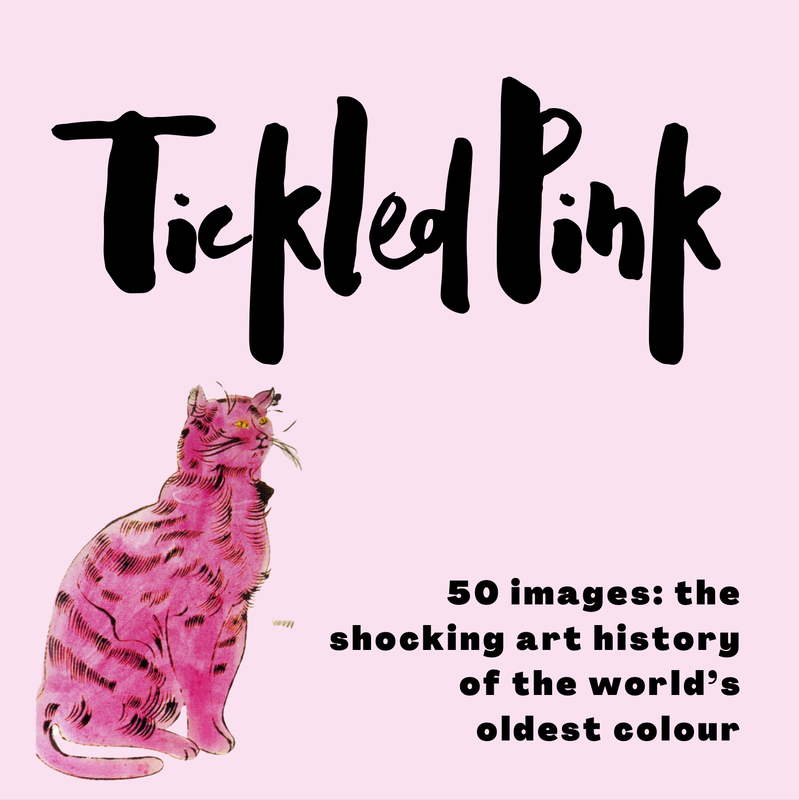


April 2024
|